
Sometimes, when I ride through the streets and see, you know, the common man staring at me, I’m struck by how little I know of his life, and how little he knows of mine.
King George VI, The King's Speech (2010)
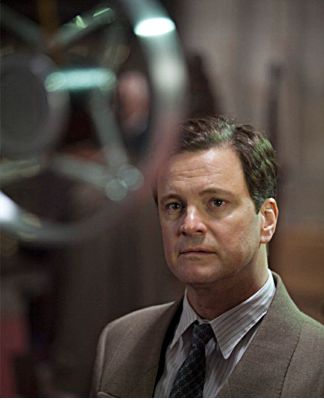
When his brother David - who has ascended to the throne reigning over a quarter of the planet's residents, and soon going to war with the rest, as Edward VIII - abdicates it in 1936, the Duke of York must reluctantly accept the crown, taking his father’s name to become King George VI. And with the advent of radio and newsreels, and the tense times, it is vital that the nation’s figurehead can speak with firmness. And clarity. And resolve. And NOT stammers punctuated with tortured silences..
"If I am to be king… where is my power? May I form a government, levy a tax or declare a war? No! Yet I am the seat of all authority. Why? Because the nation believes when I speak, I speak for them. Yet I cannot speak!"
So what does our King, portrayed by the oh-so-brilliant and oh-so-Brit Colin Firth, do? We have Lionel Logue, self-taught speech therapist, to the rescue, played appealingly by Geoffrey Rush.
The movie touches a number of interesting themes. A sucker for British royalty as I am, I see the film continue with the post-Diana mode à la The Queen, reminiscent that despite being subject to very human emotions, desires and limitations, the royals are not like you and me, or at least they aren't supposed to be. Even stammering royals, and royals wishing for the beloved common man's privilege of being able to marry a divorced woman, cannot withstand a commoner's treatment. Not because of arrogance, just because that's the bell jar they've been raised in. A divine right. The tension is ever more visible with the Australian Logue's dismissal of protocol, calling His Majesty The King Albert Frederick Arthur George, "Bertie".

Once over these hurdles, we begin to see the real reasons why Bertie was the way he was. The pressures of a royal childhood, a strict father, the repression of his natural left-handedness, a painful treatment with metal splints for his knock-knees; and a nanny who favoured his elder brother, deliberately pinching Albert at the daily presentations, unsettling him and making him cry, so his parents would allot less time to him and more of their attention to David. "You know, Lionel, you're the first ordinary Englishman... [Lionel whispers, Australian.] ...I've ever really talked to."

If only a few more people had been able to call him Bertie, if only he hadn't had his childhood fears and failings so brutally criticised by his father... Lionel is not merely a medical practitioner (which in fact he isn't at all), but a friend, a confidant!
With 14 BAFTA and 12 Academy Award nominations, a lot many more speeches need to be prepared for.
King George VI, The King's Speech (2010)
When his brother David - who has ascended to the throne reigning over a quarter of the planet's residents, and soon going to war with the rest, as Edward VIII - abdicates it in 1936, the Duke of York must reluctantly accept the crown, taking his father’s name to become King George VI. And with the advent of radio and newsreels, and the tense times, it is vital that the nation’s figurehead can speak with firmness. And clarity. And resolve. And NOT stammers punctuated with tortured silences..
"If I am to be king… where is my power? May I form a government, levy a tax or declare a war? No! Yet I am the seat of all authority. Why? Because the nation believes when I speak, I speak for them. Yet I cannot speak!"
So what does our King, portrayed by the oh-so-brilliant and oh-so-Brit Colin Firth, do? We have Lionel Logue, self-taught speech therapist, to the rescue, played appealingly by Geoffrey Rush.
The movie touches a number of interesting themes. A sucker for British royalty as I am, I see the film continue with the post-Diana mode à la The Queen, reminiscent that despite being subject to very human emotions, desires and limitations, the royals are not like you and me, or at least they aren't supposed to be. Even stammering royals, and royals wishing for the beloved common man's privilege of being able to marry a divorced woman, cannot withstand a commoner's treatment. Not because of arrogance, just because that's the bell jar they've been raised in. A divine right. The tension is ever more visible with the Australian Logue's dismissal of protocol, calling His Majesty The King Albert Frederick Arthur George, "Bertie".
Once over these hurdles, we begin to see the real reasons why Bertie was the way he was. The pressures of a royal childhood, a strict father, the repression of his natural left-handedness, a painful treatment with metal splints for his knock-knees; and a nanny who favoured his elder brother, deliberately pinching Albert at the daily presentations, unsettling him and making him cry, so his parents would allot less time to him and more of their attention to David. "You know, Lionel, you're the first ordinary Englishman... [Lionel whispers, Australian.] ...I've ever really talked to."
If only a few more people had been able to call him Bertie, if only he hadn't had his childhood fears and failings so brutally criticised by his father... Lionel is not merely a medical practitioner (which in fact he isn't at all), but a friend, a confidant!
With 14 BAFTA and 12 Academy Award nominations, a lot many more speeches need to be prepared for.
